Shopping Cart
 Empty
  
Latest Posts
Archives

Subscribe to this blog's feed

Send a Meal 
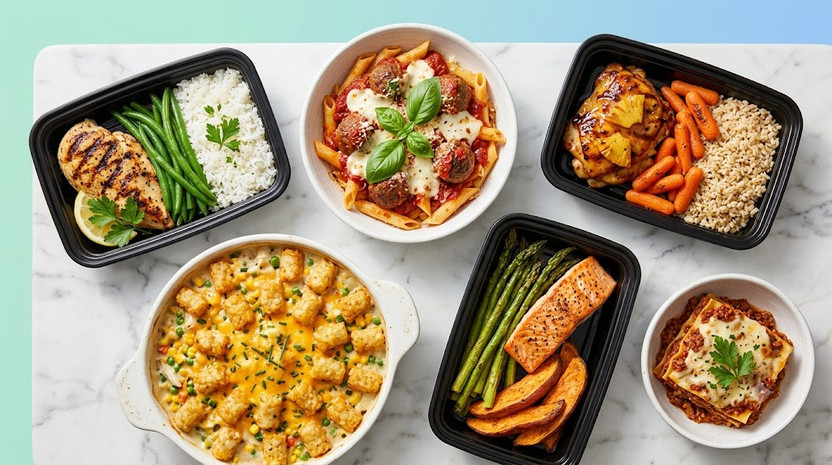
Mealtime is busier and families have less time than ever before! Here at Send a Meal you will be able to shop for quick and easy fully meals and lobster dinners that sure to please the whole family.
Click to verify BBB accreditation and to see Send a Meal's BBB report.


Thursday, 15 May 2008
Best Barbeque Online   

Meat Grades...

Beef

When shopping for beef, it’s harder to see the quality in a brisket than it is to see the quality in a steak. But if you know how steaks are graded, you’ll have an easier time selecting your next brisket. With beef, safety inspection by the USDA is mandatory, but grading is optional. The top three grades are prime, choice and select. Usually only prime and choice are graded and marked at the retail level. Prime is usually reserved for the nicer restaurants but can be found occasionally in upscale meat stores. Choice is the grade found in most grocery stores and discount warehouses. Select is a lot leaner cut of beef and it is what is sold in the big discount retail grocery stores. “No roll” beef is beef that has not been graded by the USDA. Usually beef that has never been graded would fall into the “select” grade. So, when selecting the best brisket for slow smoking, look for a well marbled piece of meat.

Here are some good web sites which show the differences in marbling...

http://www.ams.usda.gov

Another way to select great beef is to buy the Certified Angus Beef brand (CAB). Remember that this is only a brand name and not certified by the USDA. CAB grades as USDA prime or the top 35% of USDA choice. So... just look for the CAB brand and your shopping will be a lot easier because you know you will be getting good quality meat. Visit their web site for further info...

http://www.certifiedangusbeef.com

Chicken

Chicken is a little easier to shop for because there are only three grades - A, B, and C. Grade A is usually the only grade sold in grocery stores. Grade A chicken has no defects, is meaty, full breasted, firm, no broken skin, and no broken bones. Anything else will be grades B or C. Sometimes you’ll find that the “on sale” chicken will be grade B or C. For more information, visit...

http://www.ams.usda.gov/poultry/standards/AMS-PYST-2002.htm#70-220-Start

Pork

Pork is sort of like chicken... there are only four grades 1, 2, 3, & 4 and most of the pork sold in grocery stores is grade 1. So your choice is fairly simple. Look for pork that is firm, grayish pink in color and has a good degree of marbling. I always buy the full racks of spareribs. The best ribs are “2 and under” but they are harder to find. 3.5 and under are more common and do just as well. Buy 4 and under if you have to but stay away from the “hogzilla” 5 lb spareribs. Remember, this is for the full untrimmed spareribs - not the loin cut, St Louis cut, or baby backs. To see how to trim your spareribs St Louis Style, visit...

http://www.bbq-book.com/news2006/html/october_2006.html

For a pork grade chart, visit...

http://www.ams.usda.gov/lsg/stand/slaughterswine.pdf

For more information on slow smoking competition quality ribs, butts, chicken, and brisket, please visit Bill Anderson's web site at http://www.bbq-book.com or http://www.bbq-recipes.net

POSTED BY: Send a Meal AT 01:04 pm   |  Permalink   |  Comments   |  E-mail this
Wednesday, 14 May 2008
Preparing Food   

Contaminated food poses a significant health hazard - one that we all must be careful to avoid. Harmful microorganisms and bacteria which can grow on virtually any food item can cause stomachaches, illness, or even death. Although there is no absolutely foolproof way to prevent exposure to these dangerous germs, practicing good food safety can greatly reduce your risk of being a victim of food poisoning.

Wash Your Hands

One of the simplest rules for food preparation is to wash your hands thoroughly and frequently. To do this, wet your hands under warm, running water, lather with soap for at least 20 seconds, and rinse thoroughly afterwards. Make sure to clean inside skin creases and under fingernails; these are prime places for germs to hide. Though mundane, washing your hands helps prevent food poisoning in several ways. First, it prevents you from transferring any bacteria or harmful substances you may have accumulated on your hands onto your food. Second, by washing your hands frequently and between steps of food preparation, you can avoid cross-contaminating your food.

Cook Thoroughly

Meats, poultry, seafood, and eggs are some of the best places for bacteria to thrive. Raw meats are particularly notorious for containing any number of harmful germs. The best way to kill off these germs is by cooking all meat thoroughly; extreme heat will be able to destroy most germs. The best way to tell if meat has been cooked well is with a meat thermometer. Some rules of thumb: beef and pork should be cooked to 160 degrees, Poultry to 180 degrees, and ground meats to 165 degrees. Of course, not every has - or wants to buy - a meat thermometer. In this situation, color is often a good indicator - meats which are pink should be considered undercooked.

Avoid Cross-Contamination

Though fruits and vegetables are far less likely than meat to harbor dangerous bacteria, they are not 100% safe. Furthermore, if different types of food are mixed, bacteria can "jump ship" and cross-contaminate both foods. Blood and juices from raw meat, for example, contain large numbers of bacteria. If fruits or vegetables are exposed to this liquid, they can be contaminated as well. To avoid this, be sure to keep different types of food well separated. Cook in stages, and don't cut raw meat and vegetables on the same cutting board without washing it first.

Keep a Clean Kitchen

A popular set of statistics shows that kitchen counters, sinks, and surfaces are home to far more bacteria than the typical bathroom. One study showed that the kitchen cutting board - yes, the same board where you slice your meats, vegetables, fruits, and more - may have some 200 times the number of bacteria on the toilet seat. All these disgusting numbers show one thing - it is absolutely vital that you keep your kitchen clean. Don't allow garbage or leftovers to pile up. Wash dishes frequently and well. Replace worn or dirty cutting boards, cleaning rags, and sinks. The neater and cleaner your kitchen is, the less places germs can hide, breed, and wait to jump into the food you eat.

Now that you've mastered a few of the basics of safe food preparation, put them to use. For recipe ideas to jump-start your cooking, visit http://www.cdkitchen.com

POSTED BY: Send a Meal AT 09:58 am   |  Permalink   |  Comments   |  E-mail this
Tuesday, 13 May 2008
Italian Food Delivered   

The menu could possibly be the single most important element of the Italian restaurant. After all, it is what is on the menu that keeps the customers coming back again and again. Careful consideration should go into planning the menu; this includes not only what foods you will serve, but also the layout and wording as well.

The first thing on your agenda when planning an Italian food menu is what type of food you will be serving. Are you serving just pizza and Italian sandwiches or will your menu feature a larger variety of dining options?

Next on your menu planning schedule should be to find several similar restaurants and study their menus. Pay attention to the variety of dishes that they offer, and how their menu is arranged.

Unless you already have your heart set on exactly what it is you will be serving in your diner, you may want to consider trying some of the most successful Italian restaurants in the area and incorporating some of their best dishes into your own menu. Some of the best Italian restaurants offer authentic foods from Italy, as well as some American versions.

Another point to keep in mind is that some of the best eating establishments have a signature dish that is all their own. You may want to create a taste that is unique to your restaurant. This is a sure way to keep the customers coming back.

Divide your menu into sections that include appetizers, drinks, lunch, dinner, salads, sandwiches and desserts. Now you are ready to fill your menu with the many wonderful and tasty dishes that you have planned.

Planning your menu includes much more than simply deciding what foods you will serve. Proper layout of the menu is also important. Again, study the menus of your competitors. How do they have their menu arranged? What are the menu's advantages and disadvantages?

By taking careful note of these aspects of the menu, you will have a good idea of how to best layout your own menu. Generally, appetizers and salads, along with soups appear first on the menu, followed by sandwiches, lunch selections and finally dinner plates.

Another extremely important factor that should not be overlooked when planning your menu is the color scheme and theme of your menu. The colors and graphics of your menu should reflect the overall theme of your establishment.

Don't forget that you will need quality graphics to represent the many wonderful dishes that you will be serving. The importance of this cannot be stressed enough. People are visual and want to see what their food will look like. Last but not least is menu selection description. Use very descriptive and flowing language when describing the selections that are featured on your menu.

Once you have settled on your menu items, you'll be one step closer to your dream of opening a successful Italian restaurant.

Jessica Ackerman is a popular contributor for one of the best seattle pizza delivery restaurants- Padrino's Pizza and Pasta. Do not hesitate to call them for your late night food delivery

Enjoy this article? For more pizza and pasta tips and recipes visit our Seattle Pizza Blog

POSTED BY: Send a Meal AT 10:04 am   |  Permalink   |  Comments   |  E-mail this
Monday, 12 May 2008
Gourmet Food Cooking   
The tools are almost as important to the recipe as the ingredients and the words in the recipe. Picking the right tools can sometimes be a daunting task..

Its always best to start with the basics such as vegetable peelers, knives, cutting board, and utensils and plates to put the food on. Starting with a basic understanding of how basic tools work is the first step to being able to understand and know how to buy different gourmet tools.

Even these simple tools need to be understood, and making sure to spend money on quality tools is the first step to becoming a gourmet chef. A chef who doesn't know how to properly use a carving knife, or how to operate a vegetable peeler isn't really a chef until they can master those tools. These are some of the most basic tools a gourmet chef needs to know about.

One a chef has mastered these particular tools its time to move onto more complicated tools. For example many gourmet chefs use mandolines as a means of chopping up vegetables.

These are much like shredders, except instead of having little pieces of metal jutting from the metal base, there is one long blade in the center of the device and the vegetable is scraped over the blade giving thinner and more precise cuts. Its much like a meat slicer, except for vegetables and even cheeses. It's tools like these that separate simple tools such as graters from the more complex ones.

Mixers can also be a great gourmet cooking tool. Professional mixers come with a variety of different attachments for pastry, vegetable fillings, and even bread making attachments.

Different ingredients need to be handled differently and different attachments on certain professional mixers will allow for things such as egg whites to be handled more delicately than other items. Many professional mixers can be pricey, but many gourmet chefs emphasize the need for costly tools in order to properly propel the craft of cooking forward.

Buying the necessary attachments and spending the money it doesn't hinder a cook and allows them to be as open minded and creative as possible because they have the needed implements to do so.

Measuring and timing tools are another crucial tool that must be bought and handled correctly. It's best not to buy cheap measuring cups and spoons because sometimes these plastics will not hold up to the dishwasher.

Its best to buy metal or another kind of material because plastic is usually never sturdy enough. Also make sure that your tools are as accurate as they can be. The more accurate the better measurement, and the better the recipe will be!

Its important to pay attention and shop at quality cooking tool stores, stores that mainly focus in selling these cooking tools only, rather than chain stores that do not specialize in cooking tools. In truth its best to pay attention to what you buy.

The more you pay attention to this, the better your dishes will be and the more knowledge you will gain about the craft. Also you will be able to teach other people and explain to them how to use a seemingly confusing contraption.

Find discount Gourmet Cooking Tools at : Discount Gourmet Cooking Tools

POSTED BY: Send a Meal AT 12:12 pm   |  Permalink   |  Comments   |  E-mail this
Friday, 09 May 2008
Buy Lasagna Online   
The main lasagna recipes are those with tomato and besciamella sauce. Lasagna is only another shape of pasta and so, it also matches with an infinity of seasonings.

Among all lasagne recipes, the number one should be the most traditional one. Before preparing it, it's necessary to have already a tomato meat sauce and a besciamella ready to use.

A good tomato meat sauce needs good ingredients, as they contribute strongly for the best final result.

You'll need (4 people):


4 spoons of extra virgin olive oil


200 gr of ground veal meat (instead of ground, it can be minced too)


2 cans of peeled tomatoes


½ minced onion


2 pieces of minced garlic


minced parsley


some basil leaves (if you don't have them, don't worry)


salt

How to do it:

Put the oil inside a pan (it's better to use a "high" pan, to avoid squirts), turn on the gas and add the minced onion. Leave it for a while, mixing it to avoid overcooking, and then add the minced garlic and the minced meat.

After colouring it for a while, add the peeled tomatoes cut in medium pieces. Mix it all and leave it on high gas for a while. As it begins to boil, regulate the gas to avoid overcooking it, but leave it a little bit high. Otherwise you'll get a "too liquid" sauce, and a good one should be dense. Mix it every now and then.

When your Italian tomato sauce is ready? When the oil is separated from the tomatoes. It'll take about half an hour for this quantity, but pay attention when you mix it that you'll notice that you can see the oil apart from the tomato cream.

The besciamella:

It's much simplex than the name suggests. Just take ½ liter of milk, add 3 spoons of wheat flour and half spoon of butter. Mix it while on the low gas until it' gets creamy. Add then salt and nutmeg.

Other than the tomato sauce and the besciamella, you'll need Italian mozzarella and grated Grana Padano or Parmigiano Reggiano. Don't use any cheese, as a good cheese really makes the difference.

The lasagna packages say that it doesn't need to boil before going to the oven. But the old Italian women are distrustful and prefer to do it their way. What do they do? They put the lasagna sheets for about a minute into the boiling salted water and then put them on a dishtowel, without laying one upon another.

(If you choose not to boil them, they will come less softy and the sauce will not mix so much.)

Take an oven pan and begin with a layer of tomato sauce, then lasagna sheets (not overlapping them), besciamella, tomato sauce again, pieces of mozzarella and grated Grana Padano.

Go ahead until the ingredients finish, taking care of finishing with the tomato sauce with cheese.

Put it into the pre-heated oven (about 180°C) for about 30/40 minutes, when it began to get crispy on the boards.

Tip: After taking it out of the oven, wait for about 20 minutes before serving. It will allow the pasta to absorb the sauces and will be easier to cut and the taste will gain.

Other lasagna recipes:

An easy and original idea is to use pesto between lasagna sheets, adding grated Parmigiano Reggiano and less besciamella.

Another vegetarian recipe is using tomato sauce without meat. Do the sauce in the same way without adding meat and proceed for the lasagna the same exact way.

An original veggie recipe is using grilled eggplant between tomato sauce and besciamella.

For more information on Lasagna recipes visit All About Italian Food.

Ana Maria da Costa. Economist, living in Italy since 1983 and proceeding the studies in Food and Wine culture

POSTED BY: Send a Meal AT 07:35 am   |  Permalink   |  Comments   |  E-mail this
Would you like to have your article or recipe appear on Send a Meal's blog for all our visitors to read? Use the simple form below to send it to us.

Submit your article or recipie.
Name:
 *
Email:
 *
Posting:
 *
File Upload:


Home | Prepared Meals | Occasion Meals | Meal of the Month | Shipping | FAQ | Contact |
Site Mailing List 
Prepared mail order meal delivery: Send gourmet meals to your friends and family.
Nationwide food delivery, order dinners, and food gifts by mail. Perfect for ordering Father's Day dinner online.

Send a Meal
SEND FOOD. NATIONWIDE DELIVERY.

 
Solution Graphics

Do you need food delivery in your city, home delivered meals, gourmet meals, food gifts, prepared meals delivered, home delivery meal service, or home meal delivery? Send A Meal can help you. We have over 100 dinner options for you to shop from.

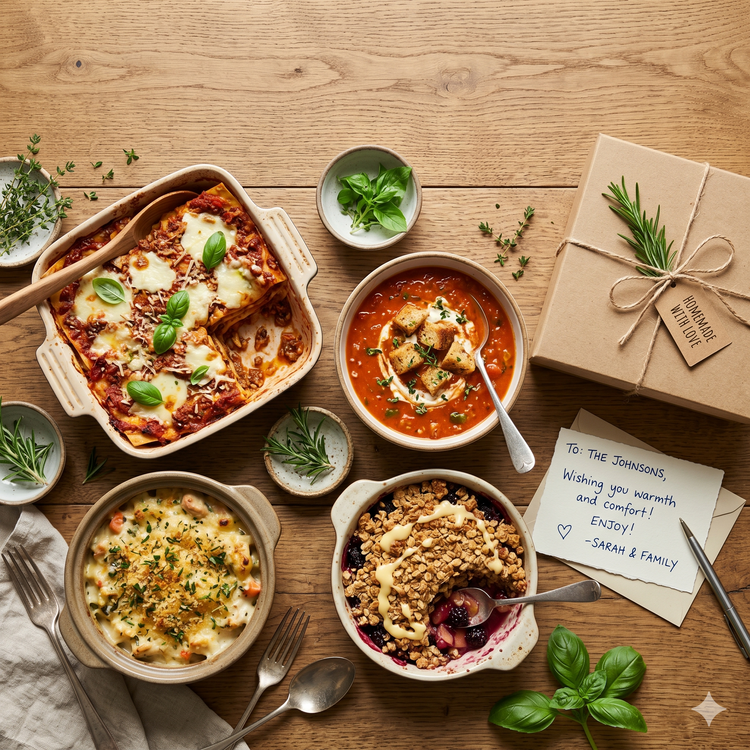
Even though these meals get eaten right away, we want to make sure that your family or friends are impressed with how good the meal looks and desire to eat what food delivery they receive. The only thing better than gourmet dinners in a restaurant, are the same food delivered to your home. Yes, you can send food, have your meal delivery, meals to go - and love every bite too.

© 2004 -2008 Send a Meal All Rights Reserved

Site Powered By
    eBizWebpages Website Builder
    eCommerce website design